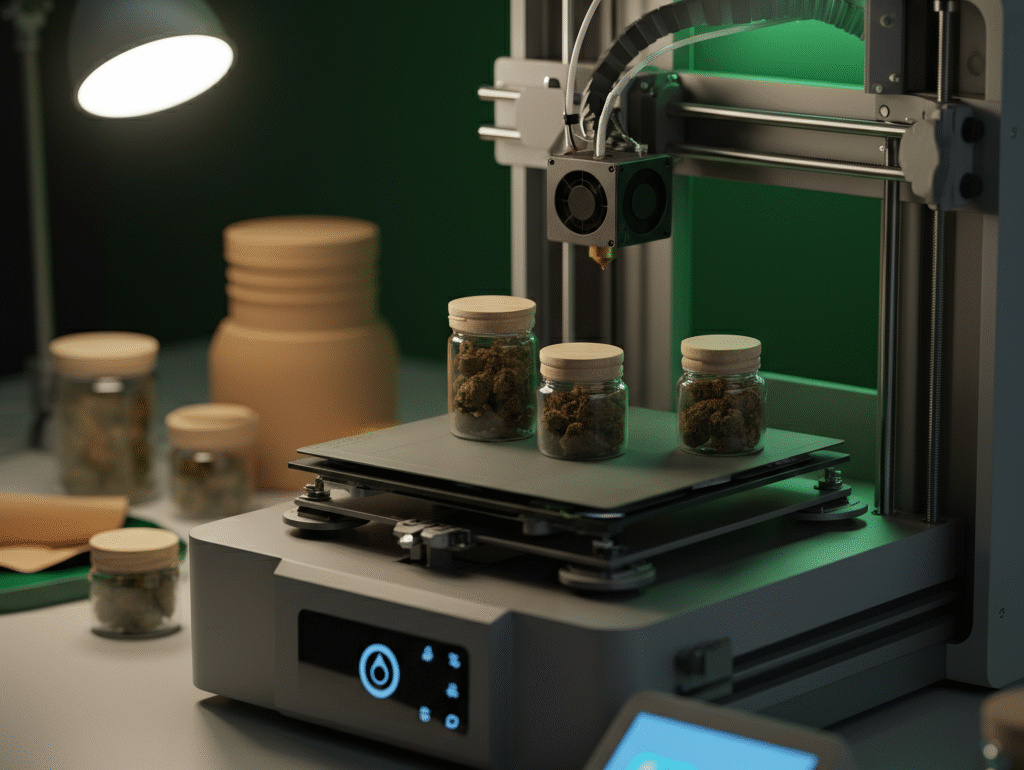
Perfect product packaging is usually accompanied by a lengthy and costly prototyping process. For any weed packaging company, it meant waiting for several weeks and paying a high price for each design iteration. Today, 3D printing is restructuring the model by providing a more creative, cheaper, and quicker way to make personal packaging.
With this invention, designers can now realize their digital ideas in a few hours rather than in several weeks. Such fast prototyping is revolutionizing the design department of a modern weed packaging company to the extent that they are now able to verify and improve their concepts at breakneck speed.
Rapid Prototyping Reshapes Cannabis Packaging Development
3D printing has become a revolutionary tool for prototype creation in different fields, and the cannabis packaging industry is not left out of the trend. This process is capable of turning a digital idea into a physical model in a short time, a few hours rather than taking weeks. Consequently, this is an offer for any weed packaging company to have much faster iteration cycles and the capacity to try out numerous design modifications before investing in costly tooling.
The additive manufacturing process opens the doors for the production of smooth curves and tiny details, which otherwise would have been very difficult or even impossible by traditional manufacturing methods. The cannabis industry can, at this point, come up with innovative closure mechanisms, child-safe features, and even novel structural elements, which not only serve the product functionally but also increase the brand value of the product.
Cost-Effective Solutions Drive Innovation
Normally, prototyping through traditional methods requires quite a heavy investment in molds and tooling at the start of the project. A weed packaging company can avoid these expenditures by 3D printing its first design validation. This cost reduction provides small cannabis businesses with the opportunity to be on equal footing with large corporations, since they, in turn, get the chance to invest more money in design creativity and market testing.
Producing small quantities of prototypes at a low cost can allow cannabis manufacturers to carry out the market research of their products in a more focused way without the risk of losing money due to large-scale production runs. This method results in final products that are more refined and efficient in meeting the expectations of consumers as well as the requirements of the authorities.
Enhanced Customization Meets Market Demands
The consumers of cannabis are demanding more and more personalized experiences, and packaging is playing a vital role in differentiating the brands. 3D printing makes it possible for all the weed packaging companies to look into the possibilities for customization, which were very expensive before. Whether it is dispensary branding that is personalized or product-specific designs that are unique, the technology paves the way for market segmentation.
Cannabis businesses now have the capability of designing the packaging specifically for various product categories, several consumption methods, and even the different target demographics they have. This high level of customization lets a company strengthen its brand loyalty base and create unforgettable unboxing experiences that motivate customers to purchase again.
Wrapping Up
With ongoing improvements in 3D printing technology, more and more features of the cannabis packaging industry will be impacted by it, and we can’t wait to see what the future holds beyond that. Smart packaging solutions leveraging IoT sensors, advanced materials, and eco-friendly options will be readily available to any weed packaging company in the future. 3D printing, as a regulatory change companion with fast prototyping capabilities, will definitely be a powerful instrument for the cannabis industry to keep up with this dynamic market of competition and compliance.